I admit it: For the first time, I've jumped on a literary bandwagon. And, yes, I'm annoyed, mainly because I had to request the book from the library and waiting in the queue was a major pain in the ass. No, but seriously, this wasn't a whim brought on by the new BBC adaptation; having been a fan of the original series starring Robin Ellis and Angharad Rees as Ross and Demelza, I intended to read the series way back when. (Not when the original series came out—I'm not that old! I'm simply talking sometime in the late 90s, maybe early naughts.) But I never got around to it—one of those situations of getting caught up with other books and losing track of my to-read list. (This was well before I'd stumbled upon Goodreads and its handy virtual library shelves.) Then I bought the DVD set of the original series a couple of years ago and it reminded me of the books, but, weirdly enough, at that time my library didn't have them. You'd think the Poldark series would be a pretty solid, mid-20th century classic set of books for a library to own, but since it's the Sourcebooks copy they own now, with Aidan Turner from the new BBC production on the cover, they obviously only bought in it the past couple of months or so. Aaaaand I'm getting off track.
Anyway, this is billed as a classic romance, but it's not, not really. At least not in the way you'd expect. After all, it's written by a man and (not to get all reverse sexist here, but) men don't really do romance. Don't expect flowery prose, complicated and complex conversations concerning the relationship, softly lit and erotically charged love scenes, etc. In fact, beyond a few musings from Ross (“Hmm, I still regard Elizabeth, but Demelza takes up most of my thoughts,” “Hmm, I think I'm falling in love with Demelza,” that kind of thing), it's more about the actions than any deep feelings expressed. Which is fine, but rather leaves one wanting. I mean, you go from Demelza as urchin to Demelza as bedmate and wife and wonder, where was the actual wooing? Then again, it's symptomatic of the time period and the region: life in Cornwall in the 18th century was short and harsh, so there was little time for extensive romance; you found someone you liked well enough, agreed to make a life together, and did so. Which is just what Ross and Demelza did.
Short-shrifted romance aside, this book is mostly about Ross (obviously, otherwise it would've been titled Francis or Elizabeth) and how he fits back into life in Cornwall after fighting in the American Revolution. When he returns, his father is dead, his family farm is in ruins, the family servants are slovenly sloths, and his mining interests are all but exhausted. Basically, Ross has nothing and must rebuild his life from the dust and debris of what he's given. As he figures out how to come back from this precarious position, we also watch him develop as a person; when he returned, he was not much changed from the angry young man who'd left--a bit wearier, a bit more cynical of human nature--but the small joys found in his new life eventually sand away the rough edges that remain and while Ross still rebels against the class system that keeps the poor poor (and starving, near homeless, jobless, and without any means of improving themselves), he's less likely to use his fists to fight the injustice he sees (although that doesn't mean he won't if it comes down to it; Ross doesn't become a total pussycat). And that's what makes Ross unique; even though he's a country squire, someone of a higher class than the farmers and miners whom he supports, he'd much rather socialize with his "inferiors" than with those who are his supposed peers, and there are several occasions when he rails against those of his class for remaining willfully oblivious to the suffering of the lower classes.
If Winston Graham isn't generous with romance in his dealings with Ross and Demelza, he is, however, overflowing in his love for the Cornish people and countryside. And that's where the book shines. The landscape comes to life--the roiling sea, the salt-wind-swept grasses and heath, the dangerous and claustrophobic mining caves--along with the rough-and-tumble people who struggle to eke out an existence in this harsh, but beautiful land. But you also see and feel and smell the horrors of the time, the casual cruelty of beatings and cock fighting, the unwashed bodies crawling with lice, the crowded jails filled with forgotten souls, their only companions Pestilence and Death. This balanced perspective keeps the novel from becoming either too saccharine or too grim.
About the only real criticism I have is for the language. Oh, not that it's salty or anything (it's not), but there are occasions where reading the dialogue of certain characters was quite difficult. One, the young wife of the local doctor, because she had a speech impediment--she lisped quite badly--meaning I had to read and re-read what she said several times to understand it, and sometimes I still didn't fully comprehend certain words, even when I used the context of the entire sentence, so I simply gave up and moved on. The other occasion was the patois of the native Cornish speakers; most of the time it was pretty easy to work out what was being said, but occasionally it got a bit thick--Jud in particular--again necessitating a couple of re-reads before I got the gist of things.
In a slightly off-topic rant, reading the book gave me a new appreciation for the TV adaptations, though. The first one, with Robin Ellis, followed the books much more closely, while the second adaptation was quite a bit freer with the story. Then again, that seems to the be the trend whenever a classic miniseries is remade: the story is trimmed, oftentimes quite dramatically; the source novel is only lightly touched upon; and most importantly the “cheesy” soundstages and interior shots are exchanged for location and outdoor shooting, which is fine except when certain productions seem to go overboard in that direction just to prove a point. You notice that? The original Upstairs, Downstairs had 68 episodes and while it wasn't shot on a soundstage, it was shot pretty much exclusively inside 65 Eaton Place, Belgravia, London. The new Upstairs, Downstairs had, what, only 9 episodes as well as outside and location shooting alongside filming at 35 Clarendon Square. The original Forsyte Saga runs for 26 episodes and more closely follows the book, which includes making Soames Forsyte the bastard he is, while the later Forsyte Saga runs only 10 episodes and is quite a bit more loosey-goosey with the story. (And there are a lot of people who hate that this later version made Soames more sympathetic, going against the grain of the original story.) Personally, I like the later version of The Forsyte Saga mainly because of the luminous Gina McGee, but I acknowledge it takes quite a few liberties with the source material. And then we have our current topic, Poldark. The original TV production ran for 29 episodes, which allowed for a deeper exploration of the books' storyline, while this newer production seems to be skipping over some bits. And, don't get me wrong, I admire Aidan Turner's tumbling, windswept curls as much as anyone, but it seems like most of the shots seem to be of them rather than of anything else. I know I'm exaggerating, but you get my drift. And why do we still not have a Demelza with black hair, as she is in the books? I love gingers, I do; I wish I was a ginger and have dyed my hair often enough to achieve that end, but still... Demelza has black hair, even with her fiery personality. Okay, rant over.
To get back to the book (after all, this is a book review, right? Right): At the end of the day, this is a solid mid-century historical fiction novel, with the slightly stilted writing style typical of that era. Yet it remains a strong, highly readable story focused, at heart, on the same human emotions and turmoils from which we still suffer today.
Read from August 19 to 24, 2015
Sunday, October 18, 2015
Saturday, October 3, 2015
"Set in the stone wall was a circular door of polished steel, on which the skull-and-Ouroboros was inlaid in shining brass."
I tried, I feel I really did. But I got to Chapter 8--page 85--and could go no further. This is an ambitious book, but the author misplaced those ambitions, putting all his toys in his world-building toybox without leaving anything for development and execution. And that's my main issue with the book, the world building: Yes, it's detailed. However, it's never fully explained. Now, I admit, I hate info dumps and it's a poor writer who uses them to explain how his or her world works. But I also hate a book where the author throws words and people and situations at you without explaining context, history, origin, or without even giving you a general understanding of what the hell is going on! I mean, yeah, it's cool to be in a world where a day is 25 hours long, or power is provided by the bones of the dead; where captive wraiths power elevators and escalators are powered by runes. But I'm the kind of reader who needs an understanding of the how and the why, a history of how a world in which humans and zombies and wraiths and mages can live side-by-side, in relative harmony, even if it's just a sentence here or a throwaway line of dialogue there. Instead, I'm left feeling more and more lost as the book continues to sink me further into this world without providing any sort of guide rope to follow. Yet, Meaney went overboard with certain scene descriptions where there was no reason or no action relevant to the plot. For example, Meaney goes into great detail concerning the main character's, Donal Riordan's, evening ritual, wherein he comes home, uses the bathroom, changes and does some stretching, goes out for a run, comes home and takes a shower, changes clothes again, goes back out, buys a book, eats, comes home, reads in bed, and falls asleep. Seriously. All that took up four pages of the book. Why? Yes, Riordan does his running in the underground tunnels of the city, which are used in a later action sequence. However, that information could've easily been introduced in a more interesting manner without all the other, extremely boring stuff that gave me no insight into Donal's character and certainly did nothing to actively advance the story.There's a lot of imaginative stuff in this book, but it hasn't been presented well and that's where the poor execution shows: Poor character development, poor sentence construction (a lot of sentence fragments), and just a general lack of flow and easy readability. This wanted to be hard-boiled. This wanted to be the snappy, sparsely-written detective story in the vein of Dashiell Hammett and Raymond Chandler, just with a few twists on the setting. It's not. Meaney confused brevity with lack, and it shows. (Meaney has the idea that if you throw in enough skulls, Ouroboros images, catacombs, along with zombies, deathwolves, and other assorted ghoulies, we'll get the idea that his Tristopolis is a Gothic wonderland without him having to go to the actual effort of bringing his creation to life with history and backstory. It's like one of those Hollywood backlots, where the fronts of the buildings look all functional and fabulous, but there's nothing behind them except some 2"x 4"s propping the facades up. Not to mention everything Meaney describes is either black or purple. Now, I love me some purple, but after a while, even I got tired of hearing about the color!) And there are multiple italicized asides that simply add to the confusion as we have no idea who's speaking them, if they're indeed being spoken, or if they're internal, I'm-going-crazy-and-this-is-what-I'm-hearing whispers in Donal's head. For example, Do you hear the bones?,So beautiful..., We are the bones, We know you now. Again, there's no context, no explanation, no reason behind them other than a sense of, "Ooh, look, I'm making things spooky here, folks! This is my Gothic-detective-fantasy novel and things are getting wei-rd!"
I might not have had a problem with any of this if I could've gotten a handle on the main character, but it seemed as though every time I turned the page the man would flip his personality. Donal would threaten one character for off-the-books fudging of inventory and then turn around and do something shady and very un-cop-like the next chapter. I still don't know what Donal's motivations are, what his innate character and personality is, nothing about what drove the man to do what he did. And that fits in with the overall description for this book: It's an enigma. One I don't care about, nor was ever given a reason to care about, solving.
Read from September 27 to October 2, 2015
Wednesday, August 12, 2015
"A clear conscience was his greatest asset, the reason for his extraordinary success."
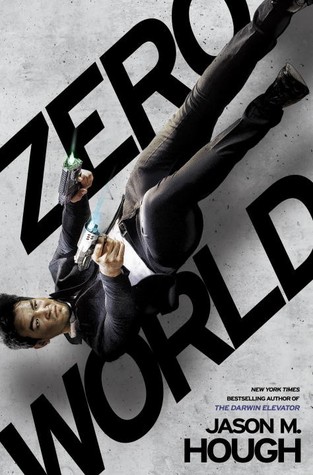
Peter Caswell wakes in a silk-sheeted bed in a luxurious flat in London with only a song refrain running through his head to tell him who and where he is. You see, Peter is an assassin, the best in the world, thanks to his ability to blend in anywhere, but he never remembers where he goes or who he kills because of the implant in his head and the timed-release chemicals it contains. And that's just the way Peter wants it. The only thing he allows himself is knowing how many kills he's made and that only by the number of Sapporo beer bottles, out of twelve, with labels turned away, a count done in the moments before he reverts.
And so begins one of the most twisty-turning, heart-pounding, thought-provoking books I've read in quite some time. It would be easy to describe this book as a spy thriller wrapped up in science fiction. Easy, but probably not quite accurate, not to mention too simplistic for such a complex tale. Having never read any of Jason Hough's other works, I don't know if Zero World is characteristic for him or a story that shows him growing as an author, but I will say that what I read left me mightily impressed. It would be quite easy, with such a complex and fast-paced story, for authors to skimp on certain things such as character development or world building, but that's not the case here. In fact, I was completely blown away by how much thought Hough put into creating the parallel Earth on which most of the story takes place. The differences between our two worlds are often quite simple, yet at the same time truly innovative. (Such as opening a door: here we turn a doorknob; on the alternate Earth, a door opens by way of a foot latch. So simple, yet I dare say no-one would've thought of it had the question been posed. I know I wouldn't have. Or expressing appreciation: here we simply say “Thanks” whereas alt. Earth uses “Gratitude.” A subtle, yet powerful difference.*) Yet, those differences are never outlandish or thoughtless or untrue to the story; they feel completely organic to the culture Hough has created. Even the names of the characters populating the alternate Earth are a degree or two away from familiarity for us, yet a natural extension of alt. Earth's evolution. But what makes this world-building so amazing was how deftly Hough managed to insert so much backstory and so many details without any of it ever becoming overbearing or an info-dump. As a writer, I'm in awe. And I also kind of hate him. Just a little bit.
The storyline is told from the perspectives of both Peter Caswell and his alt-Earth counterpart, Melni, which is another way Hough gives us a greater view of the world(s) he's created. The thing is, as developed as Peter is, Hough didn't skimp on Melni's development to achieve that. Melni is just as fierce and dedicated to her mission as Peter is to hers and as the story progresses it peels away the layers of her character allowing us to find out what drives her, what scares her, what makes her Melni. Which is awesome. It's so refreshing to find a female co-protagonist who is neither a fainting wimp nor an aggro female who probably started out as male. Yes, Melni can be vulnerable and, yes, she can be hard-ass, but she never loses her humanity or her femininity. Even his secondary characters have a depth to them that gives the impression that, if Hough were asked to, could step up and become the center of the story without difficulty.
Then we get to the story itself, set sometime in the future, which is . . . complicated. I mean, you start out with an enhanced super-secret spy-assassin, then progress to space travel, wormhole travel, an alternate Earth, and one heck of a conspiracy that sets everything Peter ever knew or believed in on its ear, and you've got a story that can't be easily condensed into a short summary. At least not without giving a misleading impression of what you'll be reading or giving away any number of spoilers. For all its complexity and genre-bending subject matter, not to mention its hefty appearance, Zero World is a fast and engrossing read, sucking you in from page one and only reluctantly letting you go. It's one of those books that will keep you up at night, making you want to know what happens next and then what happens after that. Not to mention you get a bonus novella, The Dire Earth, at the end, allowing you to keep the adventure going when the main novels ends.
So, really, all I can say is if you like books of a sci-fi, spy-thriller, futuristic, alternate Earth, dystopic, action-adventure, military leaning (and who doesn't?), with just a dash of romance thrown in for good measure, I'd strongly suggest you pick up Zero World right this minute. And prepare to have your mind blown.
*About the only weakness comes from the main curse word Hough created. Where we say fucking, alt. Earth uses blixxing. Now, having gone through the arduous process of creating an adequately vivid and powerful curse word myself, I can appreciate what Hough went through to create blixxing and for that I can't fault him. But whereas fuck represents a clear, Anglo-Saxon directness, it's hard to imagine the linguistic path of blix (or is it blixx? I can't remember). I'm sure I'm in the minority with this kind of struggle and I fully acknowledge I am a linguistics geek, making this a petty quibble, but considering this was the only thing out of the entire book that gave me pause . . . that's pretty blixxing good!
Read from June 18 to July 2, 2015
Reviewed for the Amazon Vine Program August 12, 2015
Tuesday, June 2, 2015
"Once Star received his power, the herds of Anok wouldn't be able to control him, and he realized that was the source of their fear."
Reading this made my inner child (who often escapes and runs amok as an outer child, but that's an issue to deal with another day) gleefully, squealingly happy. About the only thing that would've made the whole thing even better would've been the presence of unicorns. But that's just my horse-obsessed inner child speaking.
The story revolves around a very familiar theme, that of loneliness and not belonging and wondering if everyone would be better off if you just ran away. Believe me, as a teenager, I ran the gamut of these emotions, so I could fully empathize with Star, the protagonist of the story. As a black pegasus in a world where black pegasi aren't an everyday occurrence, Star feels like an outcast. Add in an ancient prophecy attached to those rare black pegasi, one of which is born every hundred years, which states that the pegasus foal will either unite or destroy the herds and become the most powerful pegasus in the land, and it's no wonder Star is either shunned or actively bullied by the other foals, not to mention many of the adult pegasi. As a final insult, Star doesn't fully belong to his herd: His mother had been driven away from her herd and was taken in by the Sun Herd, then died after giving birth to Star; the lead mare, Silvercloud, promised Star's mother she'd protect him, a promise she's kept all these years, to the detriment of her relationship with the herd's over-stallion, Thunderwing. So not only is Star concerned about his destiny, he feels guilty for destroying the lives of those protecting him. This makes for one sad, lonely little youngster. The fact that, on top of all these issues, Star is a pegasus who can't fly . . . Well, it's no wonder he feels depressed! In the end, Star comes through his trauma and finds his place in the world, but it's a bumpy road he has to travel before reaching that peak.
This is definitely not a light and fluffy book, an impression one might get upon hearing that it's all about pretty, pretty pegasi. But right from the start, in the first chapter, we deal with bullying and fear and the threat of death. From there the book gives us fighting between herds and even within the herd--fighting that ends in a lot of death--more bullying, physical violence, betrayal and vengeance, near-death experiences due to starvation and infection, a forest fire that kills yet more pegasi . . . you get the picture. But don't be put off and think it's too dark for a kid. Trust me, at heart kids are sociopaths, and I mean that in the most positive way: They're still forming their moral compass and books that show how things can go wrong, how life isn't always fair, but how things like love, compassion, cooperation, and sacrifice can save the day provide helpful guidance. Kids are plastic, elastic, and flexible; they can handle more serious issues that we adults might want to shield them from. But exposure to the darker side of life, even viewed through the lens of fantasy, gives kids a more well-rounded attitude and the potential to cope with any future issues that might befall them. They'll sympathize with Star and root for him even as they growl at Star's enemies, especially Brackentail; they'll cry when things go wrong and yelp for joy when Star finally starts to fulfill his destiny. In short, I can see both girls and boys devouring this book and any follow-up volumes.
I've noticed some people dinging the bit where Star's tears cause flowers to spring up in their wake, complaining it's too far-fetched and silly. Um, we're talking about a book concerning talking pegasi and a star on a hundred-year cycle that gives one particular pegasus a unique power. You're going to complain about the idea of flowers growing from tears? *opens mouth, pauses, shuts mouth and shakes head* Yes, Star's tears bring forth flowers, which I took as an obvious and overt sign that his destiny isn't written by an ancient prophecy. Star's destiny is one he will write every day, one of his own making. A destiny I'm eager to read about in however many sequels Ms. Alvarez decides to write (very, very many, I'm hoping).
Read from June 1 to June 2, 2015
Reviewed June 3, 2015
Saturday, May 16, 2015
Austin has always been an offbeat city... with this book, you now know why.
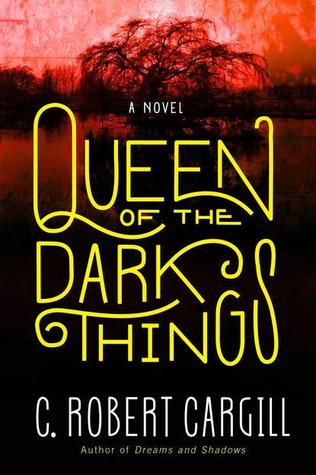
With Queen of the Dark Things, C. Robert Cargill returns to the dark, consequence-filled world he created in Dreams and Shadows. This time around, his modern fairytale comes wrapped in the mythology of the Australian aboriginal people, creating a more philosophical and, if possible, even darker story than his previous book as the themes of life, death, and the afterlife are explored.
I was actually rather surprised when I saw this book, as I'd read the first one with the understanding that it was a stand-alone novel. So with my surprise came the tiniest bit of dread. After all, Cargill's debut, Dreams & Shadows, was so dark and twisted and unique--would any kind of follow-up be able to match the level of creativity he'd created, let alone surpass it? Well, in my highly personal opinion, I feel I can say: Yes, yes it can.
Our story begins on a island somewhere in the Indian Sea in the year 1629, where the remnants of the shipwrecked Batavia have created a gallows for the small company of sailors, led by one Jeronimus Cornelisz, who mutinied. Handless and lifeless, these mutineers return as ghosts to seek vengeance on their fellow conspirators, the ones who survived the gallows by turning on their mates. No matter how long it takes. From there we return to the present, to Austin, TX and to Colby. It's been a few months since the showdown at the end of Dreams & Shadows and he's still mourning the loss of pretty much everything, especially his best friend, Ewan. This grief takes the form of severe self-recrimination and self-destruction. But Colby won't be allowed to spiral down: his actions have made him famous (or infamous, depending on who you ask) and brought a lot of people out of the woodwork. Including some very dangerous enemies looking to settle a score. Into this dark and treacherous world is thrown Kaycee, a young girl from Australia, who is the yang to Colby's yin and has some very special abilities of her own. They're drawn together, and with the aid of the djinn Yashar, the Clever Man Mandu, Gossamer the talking golden retriever, and others--not all of them willing allies--attempt to hold back the evil threatening to spill out of the land of dreams and into our world.
From demons and djinn, to ghosts and fairies and the personification of Austin in the form of a woman, Cargill somehow manages to throw together disparate mythologies and cultures into a story that is cinematic in scope (no surprise, really, considering he's a screenwriter) yet still intimate enough to make the reader involved in the characters' lives and emotional journey. As with his previous book, Cargill also intersperses chapters from scholarly works, in this case works by a "Dr. Thaddeus Ray, Ph.D." concerning the history and significance of the Aboriginal concept of Dreamwalking and the role of the Clever Men who straddle the line between our world and the Dreamtime, along with other "references" which tie into and deepen both the chapters that follow these side excursions as well as the story as a whole. The intertwining of these "scholastic" works grounds the story and adds an element of realism, setting Cargill's work apart from most Urban Fantasy. And I say that as a lover of UF. But whereas most UF is set in our world, is meant to be our world with the same set of rules just slightly tweaked by the addition of vampires, werewolves, elves, whathaveyou, you understand that none of it could ever happen. Cargill's storytelling, however, leaves a small nugget of doubt in your mind telling you that, should you turn the wrong corner at just the right time, in the right city, you might just run into something straight out of your worst nightmare.
Read from May 10-June 1, 2014
Reviewed for the Amazon Vine Program May 17, 2015
If you've ever wanted to walk in the footsteps of Charles Dickens, read this book and you will.
With this exhaustively researched tome, Judith Flanders has managed to plop the reader down in pre-Victorian London (despite what the title says; the author explains the discrepancy in her author's note) and give them a front-row seat to all the changes that occurred to that marvelous metropolis during the period in which Charles Dickens lived and wrote. Changes Dickens witnessed firsthand as he roamed the streets, memorizing every cobblestone, every inch of macadam, every plank of wood and concrete paver in his path. The man was famous for his intimate knowledge of the roads beneath his boots: It was said you could set him down on any corner in London and he could tell you the exact location using the encyclopedia of smells, sounds, and textures he'd gathered through his daily walks. Using not just his life but excerpts of his works, Flanders presents to us the city Dickens loved and lived in as well as the city as he hoped it could be.
Much like Ancient Rome, Londoners of this period spent most of their time outside the home either from desire or necessity, doing their cooking, eating, washing, working, playing, and even dying on the variously paved streets of the city. With the two-pronged approach of showing us London through Dickens' reality and his fiction, we are exposed to the cruel dichotomy created by the cheek-by-jowl nature of businessmen walking to work on streets on which prostitutes plied their trade; indigent or immigrant children playing games on streets strewn with mounds of horse droppings, raw sewage, even the bodies of dead animals; grand, stately townhomes surrounding quiet squares lined with trees and gardens sitting at the back of overcrowded, underfunded slums and tenements where the residents lived, worked, and died crowded by the dozens into shoebox-sized rooms.
I visited London back in 1997 and didn't spend nearly enough time there--I certainly didn't see all I wished to see. Reading The Victorian City makes me wish I had the ability to travel back to London and walk the streets Dickens knew. Since that's unlikely, the vivid sights, sounds, and smells Flanders presents in her book will have to suffice. If you're a Dickens fan or a fan of British or socioeconomic history, or simply a fan of a well-written, finely composed work of non-fiction, then this is the book you need to read.
Read from June 1-July 20, 2014
Reviewed for the Amazon Vine Program May 16, 2015
Thursday, May 14, 2015
"Good Lord, Maisie Dobbs, where do you think you are going with those books?"
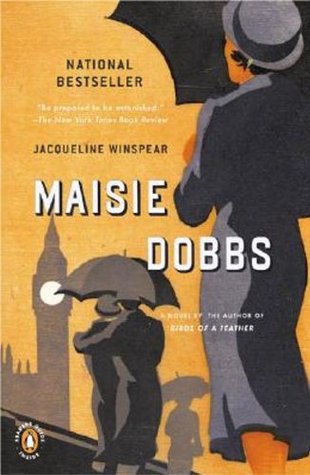
3.5 starsAs often happens with novels I rate at 3.5 stars, I have mixed feelings about what I've read. On the one hand, the book as a whole was an easy read. The story moved at a quick clip--I never felt a drag in what was actually being told, regardless of how it pertained to the plot--the dialogue is crisp, and the story was entertaining. Yet, despite how entertaining the book was, it felt slightly misleading.
We start with young Maisie Dobbs as she opens up a detective agency and receives her first big case. Maisie, a young lady who was trained by a Hercule Poirot-type mentor and sponsored by a bored but socially-conscious aristocrat, treks through 1929 London to figure out if her client's wife is cheating on him, and in doing so discovers an even larger mystery involving the real "Walking Dead", those soldiers who returned from the Great War disfigured in more than just body. It took a while for the "mystery" of this mystery novel to finally unfold, and when it did, it was slightly disappointing. Anyone familiar with even the basic tenets and M.O. of a cult would've seen the denouement coming from a mile away. Not only that, but shortly into Maisie's investigation of this "mystery", the novel shifts and we spend time in Maisie's past where we discover how she came to the attention of her mentor and sponsor, and how the Great War shaped and affected her. Now, contrary to some, I like a good backstory: I like seeing where a character comes from, how they came to be who they are and discover their raison d'etre. And I understand why Winspear gives us that insight into Maisie--it allows us to understand a bit better how Maisie relates to the surviving soldiers she needs to deal with. The way Winspear did it, though, seems a bit clumsy and disruptive to the main plotline; with the mystery at the heart of the novel being so weak, it seems it would've profited from a direct telling rather than the interrupted one it got.
I also got the overwhelming sense of something "Mary Sue" about the whole book, not just the protagonist; every character was just so . . . nice. There's nothing wrong with nice, don't get me wrong, but even the villain wasn't bad per se, just thoroughly destroyed mentally by the terrors he'd gone through in the first World War. The few people that Maisie didn't "rub along with" were never out-and-out mean to her; any antagonism sprang from the other person's anger/disappointment/fear of something happening in their life, not from any personal dislike of Maisie herself. And the other characters in Maisie's life were overwhelmingly supportive of her, willing to cross any social/financial boundaries in order to assist her. Which is just so wildly unrealistic. I admit, I'm the "glass half empty" type of person. (Actually, I'm the "the glass is half empty because the glass is cracked and leaking and will cut me if I pick it up" type person.) So I have a natural aversion to anything too perky or sweet. But to have a good story is to have friction and drama, which only comes when things don't go easy: when people are mean to you, maybe for no good reason, maybe for every reason; when things are hard and no help is forthcoming from those who could ease the way, making the struggle that much more of an uphill battle. A life in which things go too easy, where everyone is on your character's side and they get all the help they need or want from those around them, has the potential to be a rather boring story.
From the author's notes and mini interview at the back of the book, the main theme of Maisie Dobbs was a personal one based on Winspear's curiosity of WWI-era Britain as well as family history/stories of that time period. Considering the violence and social upheaval the first world war engendered, perhaps Winspear didn't want to add any fictional conflict from the actions of her characters. Maybe she wanted to present a more idealized image of the ordinary citizen to counteract all that violence. Who knows. It just seems to do a disservice to the reader in my opinion. After all, even in the midst of chaos, life goes on: Good people still do good deeds, evil people still do evil deeds, and most people reside somewhere in between as they work their way through life. That's where your conflict comes from. And that's where the stories come from.
Read from May 11-14, 2015
Reviewed May 15, 2015
Wednesday, March 19, 2014
“'By all the gods, 'Hotep, is [Akenaten] mad?' I asked... ...'Oh, yes,' he whispered into my shoulder. 'He is quite mad.'”
4 out of 5 stars
As it's been a while (a long while!) since I read this book, I don't think I'll be able to turn my notes into a coherent, "traditional" review, so I'll just post them here as-is.
-Like other reviewers have pointed out, the continued use of “the phallus” got old very quickly. After the first use, in fact. And, for me, it wasn't necessarily the use of the word 'phallus' that bothered me, though it was annoying enough; no, it was the fact that it was always referred to as “the phallus.” Greenwood slipped up one time and wrote “my phallus,” and, oh boy, I had a hearty chuckle over that.
--Once again, Nefertiti is portrayed as being beautiful yet stupid. I mean, I guess I can see that as one explanation as to why she goes along with Akenaten's new religion—Greenwood writes Nefertiti as extremely biddable and easily placated, as someone who won't be dissuaded from a path of action once she's fixed on it, no matter how much anyone argues with her to the contrary—I'm just getting tired of people writing beautiful women as also being stupid. Haven't there been many beautiful women, both famous, infamous, and ordinary, over the centuries who have been twice-cursed with both brains and beauty? Why not Nefertiti as well? I guess I'd just like to see her written as being rather canny, perhaps as a woman who used Akenaten for her purposes rather than simply bowed to his. Maybe I'm just daydreaming.
--I am not a lettered or professional historian or Egyptologist; I'm more what you would call an “armchair” expert. So I can't comment on the research Greenwood has done in order to write this book, though, to my eyes, it looks comprehensive enough. And some of the hypotheses she's used in her story seem perfectly reasonable, especially as regards to Akenaten's personality. After all, Akenaten was a cult leader, probably one of the first. He managed to convince an entire country, willing or not, to abandon their belief system in favor of a god, the Aten, he may not have necessarily created but certainly limned in the image decreed by Akenaten. Because of this high-handed approach, Akenaten, as described by Greenwood, is dreamy, unfocused, unconcerned with day-to-day problems, yet also completely ruthless, megalomaniacal, deluded as well as delusional, and completely willing to sacrifice anyone in the service of his religion and his goals for the Aten. The Amarna period is a fascinating one and ripe for all sorts of exploration and deconstruction by novelists. It's also quite vulnerable to revision, which makes the version presented by Greenwood the most realistic, even probable.
--I think the main problem I had with the book, apart from it not being a mystery despite what it says on the cover (which I really can't figure out, unless they're talking about the mystery of Amarna and the goings-on of Akenaten et al, but even that seems rather senseless). What was I saying? Oh, yes, the main problem I had with the book is that it seemed as though it couldn't decide whether to be a dynamic tale of two people set in the court of Akenaten or an expanded version of one of those “What Life was Like...” books, where the daily activities of the Amarna period are brought to life by showing a couple of characters, real or fictional, acting them out. The story itself was compelling, at its heart, that of two people, Mutnodjme, half-sister to Nefertiti, and Ptah-Hotep, Great Royal Scribe, who get caught up in the center of the whirlwind changes instigated by Akenaten, from their beginnings to the bitter end. The story alternates between those two P.O.V.s, which is fine. However, where the “What Life was Like...” aspect came in was with the insertion of almost tedious asides, such as the numerous poems and songs and fables and parables recited by one character or another for the edification of some other character and, by extension, the reader. After the first couple of these recitations, which didn't seem to have any bearing on the actual plot, I started skimming over the others whenever they appeared, which was quite frequently. It's not that I have anything against reading ancient Egyptian literature; quite the contrary, in fact. I just didn't see the point of inserting so many examples of their writing into the novel. Yes, when the characters quoted something wise or on point in regards to the action of the moment, those were relevant, but the others simply felt like an excuse for Greenwood to share some of her research with us.
--It was hilarious at the end of the book: Someone forgot to put the end tag to some italic text (yet another piece of Egyptian writing, this time an edict by Horemheb, concerning his right to the throne), meaning that the last two and a half pages of the book were italicized. This has been the poorliest (that's a word, right?) edited book of Greenwood's put out by Poison Pen Press that I've ever read. The constant italics were the worst error, but I saw many others as I read, usually having to do with punctuation. Was PPP in that much of a rush to publish this book that they could've have taken a bit more time to make sure it was a bit better edited? Seems sloppy to me.
--Yet the more I think about the book and remember the story, the more I like it, in spite of its problems and idiosyncrasies. It's a vivid, entertaining, richly detailed (and I do mean detailed) look at a period of ancient Egyptian history that, yes, has been covered quite extensively in the past. But because the Amarna period is a lively enough nonfiction subject, there's enough scope and depth to mine for inspiration, and the mysteries that come along with the facts provide ample fodder for intelligently hypothesized solutions to those mysteries. Thankfully, Kerry Greenwood is an intelligent and competent enough writer to tackle those mysteries and do them some justice.
Read from August 15-20, 2013
Reviewed March 19, 2014
Though the subject matter was interesting, the telling of it was only so-so.
3 out of 5 stars
“Compulsively readable.” You see that quite frequently in front cover (or back cover, whichever) blurbs, but what exactly does that mean? And can it really apply to so many books? Well, I can't answer for the second question, but as to the first, I would say the phrase describes something that can't be put down; a book that one keeps reading well into the wee hours of the night, perhaps even until the first rays of dawn peek through the windows. If the “compulsively readable” phrase gets tossed around too much until it loses some of its punch, in the case of Harold Schechter's The Mad Sculptor it is thoroughly deserved and 100% true.
And yet...
After a while, the story begins to slow down, especially when it comes to the detailing of Robet Irwin's, The Mad Sculptor himself, many stints in mental institutions and his movements in between those stints. The whole thing becomes so tedious after a while, you begin to wonder exactly what kind of story Schechter is trying to tell. Especially when he includes the stories behind the many murders that occurred in the same Beekman Place neighborhood as where Irwin killed Veronica Gedeon. Don't get me wrong, I enjoyed those side excursions, but to me all it did was muddle the direction of the book. When I reached the end, I wondered what exactly was the point. If Schechter wanted to explore the strange history of Beekman Place and why so many murders occurred in such a short period of time in the early part of the 20th century--was the neighborhood cursed? Did it have anything to do with the deprivations of the Great Depression? etc.--which I would've found interesting, then why focus so much on Irwin? If Schechter wanted to explore the psychopathy of Irwin, why did he peel off so many times to focus on those other murders, in which Irwin wasn't involved? It just came off as messy and uneven. Which is strange because I've read several of Schechter's other true crime books and have always found him to be both informative and entertaining, with a very readable narrative. Certainly nothing like what I encountered in The Mad Sculptor.
Read from January 26-February 1, 2014
Reviewed for the Amazon Vine Program March 19, 2014
"The neglected Infanta was about to become the most courted woman in England, the Queen, the bride of the most handsome, the most kingly ruler in Christendom."

2.5 out of 5 stars
If I'd read this compilation (or the individual novels) about twenty years ago, before I'd studied and read so much concerning Tudor history, I probably would've enjoyed it more. As it is, I just know too much and have too many suppositions and theories of my own; whenever I came upon points of contention, I would say to myself, "Ah, so she went with this version of that event. Okay, so she used this birth date rather than the later one." And so on. So while I can appreciate that Plaidy was an excellent author insofar as creating believable characters and a compelling narrative, her biases ruined the overall experience as they made for rather one-sided characters, especially when it came to Henry VIII. Yes, he was a bastard, there's no doubt about that, but Plaidy's version was almost a caricature--his behavior and personality was just so over-the-top, it was cartoonish. And of course Plaidy went with the standard (at the time) portrayal of "mad" Juana, Katharine's sister, a woman whose image was thoroughly tarnished and maligned by those who purported to love her, who is now becoming somewhat rehabilitated. Not to mention Plaidy had a habit of repeating either information (in what is probably one of the earliest examples of the "As you know, Bob" exposition, I'm guessing), dialogue, or, the most egregious, descriptions. I stopped counting after about the tenth use of "piggy" to describe Henry's eyes. In a way, I believe Jean Plaidy was the Philippa Gregory of her time: she was able to introduce many exciting historical eras and personages to readers using what reference materials were available to her, for which she deserves the lauds she receives, but it's quite obvious she infused her novels with biases and suppositions, possibly her own, possibly those of the sources on which she relied. Either way, while it makes for an entertaining read for those not in the know, for those in the know, reading her books can be disappointing and frustrating, which overwhelms their entertainment value.
Read from February 17-March 17, 2014
Reviewed March 17, 2014
Monday, March 10, 2014
"The man wasn't the Devil at all. The Devil was behind him."
2.5 out of 5 stars
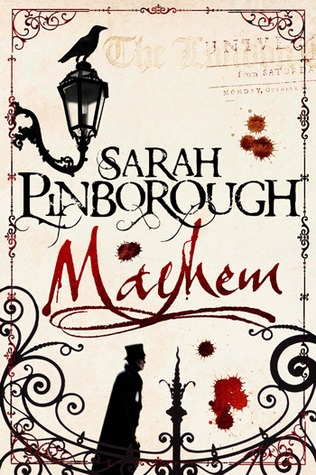
This is the first work by Sarah Pinborough I've read and while I can't say I hated the book, when I finished it I was left feeling as though something was missing from the story. It felt, I don't know, lightweight, and I'm not sure why. After all, it was well-researched (from what I could tell) and atmospheric, with a compelling story. Also a unique one. After all, how many out there, aside from hardcore Ripperologists, have heard of the Torso Killer who went on his murderous spree at the same time as Jack? Not me. Granted, I'm not unfamiliar with Jack the Ripper and have spent my fair share of time researching the case and formulating my own theories, but I'd still consider myself far from being a true Ripperologist, so hearing about a second, equally depraved serial killer terrorizing London alongside Jack piqued my curiosity to no end.
I think part, or actually most of the problem, was that the book felt as though it didn't really know what it was trying to be or how it wanted to tell the story. Divided into three parts, part one started out as a pretty straightforward historical thriller/mystery, detailing the initial search for this Torso Killer. Though the multiple P.O.V.s were distracting, the overall tone was one I liked, sort of a Victorian England CSI. The only issue I had with this section is that the story seemed a bit too reminiscent of the movie From Hell, as Pinborough wrote her main character as also being an opium addict. Then part two begins and suddenly a supernatural element, which had been introduced earlier in the form of a refugee from Eastern Europe who has visions of evil things to come, takes over and alters the tone of the story. Not only that, but that supernatural thread never feels quite right, like a skin of oil resting on top of a glass of water: it's there, but it doesn't mix in. In part three, the author is trying to tie everything together and wind the story up, and as a result things seems to drag on just a bit too long until all of a sudden, we're at the finale of the book and... it's just over with. It came off as being anticlimactic: there was a fight with the villain that was over and done with quite quickly, and the whole situation just tied itself up all neat and pretty. I didn't feel satisfied with how things worked out, like the payoff just wasn't great enough for all the trauma the characters went through up to that point. There was also supposed to be a twist, but once you put the pieces together, you could see that "twist" coming from a mile away. It didn't help that the story's multiple P.O.V.s, which can sometimes be a tricky proposition, made it quite difficult to settle into the story: as soon as I was drawn into following the story from one character's perspective, the chapter ended and another voice took over.
Which is a real shame because, at its heart, Mayhem is a well-written book. Let down by the occasional spelling mistake, some odd grammar choices, and other style quirks, sadly, leading me to feel not entirely pleased with the novel. And while the subject matter itself was compelling enough to keep me reading, I wish Pinborough had stuck to using a strictly psychological thriller angle to explore the mystery of the Torso Killer.
Read from January 19-26, 2014
Reviewed for the Amazon Vine Program March 10, 2014
Sunday, November 3, 2013
How can so much awesomeness exist in one little book? How?

5 out of 5 stars
Okay, I really hate Ann Aguirre. I am dead serious here. She writes the best action-adventure/sci-fi/fiction/YA of anyone out there today. To the point where I could literally swallow my tongue out of jealousy whenever I read one of her books. Hyperbole? Nope, not even close.
Horde is the final book in Aguirre's Razorland Trilogy , and what a finale it is! If Enclave was the skeleton and Outpost was the muscles and organs, Horde is the tattooed, punk-ass skin on this most awesome literary creation. Horde begins where Outpost left off: the town of Salvation is under siege by Freaks, the remnants of humanity gone savage, and in order to save the place they've come to love and call home, Deuce, Fade, Stalker, and Tegan must leave their families behind in order to find help in one of the surrounding settlements. But this is no mere rescue mission. Because things have changed. The Freaks are no longer just the mindless beasts they once were; they've become more cunning and resourceful, and in order to save her family and free humans from the threat of these mutants, Deuce will learn to lead an army which has forgotten how to fight. This war isn't just for the sake of her family or the families in Salvation, however. This is a war to save the entire human race, a war that must be won at all costs, and that's a burden Deuce might not be able to carry.
When I started reading this book, I promised myself that I would try to take it as slow as possible, in order to savor it, but I couldn't help myself. Aguirre throws you right into the action and makes it impossible to slow down. Which is probably why I stayed up until 6 a.m. the day I finished reading this. Even as I reached the end and was satisfied every step of the way, I mentally cried because I just did not want the story to end. (I might've also physically cried a little bit as well.) Deuce has been such a fascinating, deep, and rich character from beginning to end, and part of that comes from Ann's writing in that she's allowed Deuce to grow and to change as she learns more about herself as well as the people and world around her. Yet Deuce isn't alone; the supporting characters are all real and tangible individuals, making us care for them even as Ann plays with their “lives,” even going so far as killing someone off in a scene you'll never see coming. The bitch. And I mean that in the best way because it's only the bravest author who'll let a character die in service of the story, regardless of how much an audience might care for that character. With this novel, Deuce, already having come so far from where she started, has to keep fighting uphill battles every step of the way and Aguirre lets us see her weariness, lets us see when Deuce reaches her breaking point and very nearly snaps, feel her terror, her hopelessness, her confusion and despair. And yet she keeps moving, planting one foot in front of the other and in the end manages to come out of such blackness carrying victory on her shoulders. It's a journey that'll wring you out in so many ways, but is so fulfilling you'll want to cheer.
I have a feeling it's only the easily parsable books that are made into movies, those books that can be broken down into tropes and cliches and easily understood themes so that the dollar sign-eyed movie studio execs do a little dance for joy in anticipation of all the money they'll make off a new tentpole franchise.* Take, for example, The Hunger Games. Don't get me wrong, I read the first book and thoroughly enjoyed it as it's a well-written book. But, the thing is, The Hunger Games is also part of a trilogy, yet as much as I thought the first book was fabulous, I still have not read the other two. With the Razorland Trilogy , I couldn't not read each entry in the series even if I tried. The only way would've been to have physically stopped me, because I had to, I just had to find out what happened next. What trouble would next find Deuce, what would become of her relationship with Fade and Stalker, what Tegan would do to find her courage and place in the world. And those things may sound like issues common to any other YA book or series of recent publication, but with Aguirre's writing, there's always a little something extra, a different take or new angle on the situation. There's always more to the story. Out of the YA trilogies that have lately been made into movies or are in the process of being made, of none of them have I read beyond the first book, no matter how good that first book might've been. Though it may sound mean and counterintuitive, I really hope no movie producer or production company purchases the rights to the Razorland Trilogy , because no-one, no script writer, no director, no studio, could do it justice. Bold claim, perhaps, but just read the books and ask yourself if I'm exaggerating.
I'm not sure any of this is coming out intelligibly and I know I probably sound like some kind of squeeing fan girl. You know what, though? I totally am that squeeing fan girl and proud of it. Taut, tight, well-crafted, and often heartbreaking, her books have totally become my book candy, those titles I hoard miser-style, savor even as I speed through the pages, and turn to whenever I need a comforting pick-me-up.
*I had to edit my previous remarks to be a bit less inflammatory. You'll have to excuse them, and me, as when I wrote this review, I was coming off a major "OMG! I've just read the most awesome book in the world, finishing up the most awesome trilogy in the world!" high. In that kind of situation, enthusiasm overrules any restraint or common sense a person might possess, hence the rather bombastic nature of what I'd written. That said, I realize I'm still courting controversy and anger from others with what I've said in my review; however, I stand by my remarks and opinions.
Read October 28-November 1, 2013
Reviewed for the Amazon Vine Program November 4, 2013
Subscribe to:
Posts (Atom)